

Food safety saves lives. It is a crucial component of food security and plays a vital role in reducing foodborne diseases. Each year, approximately 600 million people fall ill due to around 200 different types of foodborne illnesses. The burden of these illnesses falls most heavily on the poor and the young. Furthermore, foodborne illnesses are responsible for 420,000 preventable deaths annually.
On World Food Safety Day, we remember that food safety is a collective responsibility, we all must play our part. This is the only way we can be sure the food on the plate will be safe. We must always prepare for the unexpected, food safety incidents can range from minor events to major international crises, wether it is a power outage at home, food poisoning in the restaurant, a food recall by a manufacturer, a wide spread outbreak or a natural disaster.
So, on this World Food Safety Day 2026, ensure you are continuing to follow our standards for food safety at all times by Being Mindful of the hazards and controls you need to implement and Speaking Out when you may see others not doing so, Get Involved and Play your Part to keep our food safe and our colleagues, clients and guests safe and healthy.
Inspired by World Food Safety Day, we want to take this month to really raise awareness on allergens, particularly gluten and Coeliac Disease, which whilst not an allergen as it is an auto-immune disease, it should still be treated in the same way as allergies.
Gluten Awareness & Coeliac Disease – Why It Matters
The Reality – Why This Matters to Our Teams
- 1 in 100 people in the UK and Ireland have coeliac disease, yet only 36% are diagnosed
- This means ~500,000 people may be undiagnosed, regularly experiencing unexplained symptoms
- In practice, this means:
- Every unit is likely serving customers with coeliac disease
- Many customers may not know they have the condition
- Our controls must assume risk exists in every service
Effective allergen management is not just compliance — it is customer safety, trust, and brand protection. Every interaction and label matters.
To find out more about Coeliac Disease please click on the link below to watch a short video to raise your awareness and please share with your teams too;
Fryer Controls (Critical)
- Display:
- Single Fryer Usage signage
- Fryer Cross-Contact Notice
- Clearly communicate:
- Gluten risk from shared oil
Fryer Posters
Customer facing advisory posters to display on your counters and at service points depending on the equipment set up you have.
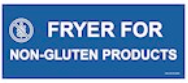
Fryer Identification Signage
Fryer identification stickers are available from Linney My Store to ensure where you do have the ability to have separate fryers for key allergen products like Gluten, Fish etc. Then you can order them from Linney My Store under HSE and then Signage.(In Ireland Contact your HSE Manager for details on ordering)
Two Options available;

Understanding Gluten & Coeliac Disease
What is Coeliac Disease?
- A life-long autoimmune condition
- The body attacks itself when gluten is eaten, damaging the gut lining
- Symptoms may include:
- Abdominal pain, bloating, diarrhoea
- Long-term health complications if unmanaged
⚠️ Important:
Coeliac disease is not an allergy or intolerance, but must be treated with the same level of control and seriousness
💬 Promote Empowered Decision Making
- It is acceptable and expected to:
- Pause service to complete allergen checks
- Challenge incorrect instructions where needed
- To politely tell someone they will have to wait while you are updating allergen information or dealing with a specific allergen request from a customer
We have also provided “Pledge” Cards so you can make your own pledge and share a selfie on WorkJam too with #WorldFoodSafetyDay2026
Please remember - all substantiated consumer allergic/intolerance reactions negatively impact our global food safety performance.
There are a number of resources below including Video and Food Safety Conversations that can be utilised throughout this month and the Allergy Posters to promote accurate allergy information and controls in your units.
Critical Definitions (Compass Standard)
Gluten-Free
- Can only be used where food contains ≤20 parts per million (ppm) gluten
- Must be:
- Pre-packaged
- Sealed and labelled by the manufacturer
✅ Acceptable: Bought-in sealed GF product
❌ Not acceptable: Food prepared in our kitchens labelled as “Gluten Free” (This term is not applicable in Ireland and must not be used)
NGCI – Non-Gluten-Containing Ingredients
- A dish made without gluten-containing ingredients
- Cannot be guaranteed gluten-free due to cross-contact risk
Required statement, full version of which can be found in GHP - 13 Allergens:
Abbreviated Version:
“Whilst every care has been taken… we cannot guarantee our food is 100% gluten-free”
Golden Rule
👉 Food prepared in our kitchens must never be labelled “Gluten Free”
Video Resources
To find out more abour Coeliac Disease please click on the link below to watch a short video to raise your awareness and please share with your teams too;
Pledge Cards & Posters
- World Food Safety Day 26 - Digital Pledge Card 1
- World Food Safety Day 26 - Digital Pledge Card 2
- World Food Safety Day 26 - Digital Pledge Card 3
- World Food Safety Day 26 - Digital Pledge Card 4
- World Food Safety Day 26 - Digital Pledge Card 5
- Poster - Are You Allergen Aware
- Poster - Accurate Ingredient Information
Food Safety Safety Conversations
Key Risk: Cross-Contact
High-Risk Areas for Gluten
- Fryers (shared oil with battered products)
- Work surfaces and utensils
- Flour in kitchens (airborne contamination)
- Similar-looking menu items (e.g. cakes, sauces, pastries)
Further Information
Further Food Safety Conversations can be found by clicking here to take you to the Food Safety Management System page where you will find all the Food Safety Conversations.